Lists of reports on this page:
Find care details, insights, and insider perspectives gained from 20+ years of helping seniors and families.
What to know about this topic:
- Types of senior care in Toronto
- Costs of retirement care in Toronto
- Senior living in Toronto
- Medical and safety services for Toronto seniors
- How seniors get around Toronto
- Availability of retirement homes in Toronto
- How to choose a retirement home in Toronto
- Toronto retirement home regulations

Among its sprawling landscape of skyscrapers, urban areas, parks, suburbs, gardens and beaches, Toronto has an assortment of inviting, culturally rich spaces for seniors to enjoy their retirement. Within these areas are an array of quality retirement communities.
This is your guide to Toronto's senior communities, which covers downtown, East York/York City, Etobicoke, North York, and Scarborough.
IN-DEPTH REPORTSRetirement communities in Toronto
FEATURED
Sagecare 147 Elder Street
147 Elder Street, North York,
Ontario, M3H5G9
Enlightened dementia care touches more than memory. 147 Elder St. is a place that provides opportunities for the joy and meaning still ahead when wellbeing can no longer be realized at home.
Lifestyle Options: Memory Care
FEATURED
McCowan Retirement Residence - Metta Lifestyles
2881 Eglinton Avenue East, Scarborough,
Ontario, M1J 0A2
McCowan Retirement Residence is a vibrant and family oriented retirement home located in Scarborough. With team members who have been here since we opened in 2004, you can expect a warm welcome and a feeling of home.
Lifestyle Options: Independent Living, Assisted Living, Memory Care
FEATURED
Forestview Retirement Residence
537 Finch Avenue West, Toronto,
Ontario, M2R 0A8
Forestview Retirement Residence offers elegant, comfortable senior living in Downsview, Willowdale, and North York, with personalized care, flexible services, vibrant amenities, and a warm, connected community.
Lifestyle Options: Independent Living, Assisted Living
FEATURED
Belmont House
55 Belmont Street, Toronto,
Ontario, M5R 1R1
A superb retirement home nestled in Toronto proper, featuring a variety of apartments and suites, along with a fitness room for active seniors, an on-site convenience store and more.
Lifestyle Options: Independent Living
FEATURED
Greenview Seniors Residence - Metta Lifestyles
880 Lawrence Ave E, North York,
Ontario, M3C1P6
At Greenview Residence, we offer a complete range of care services in a welcoming environment. Whether it's our compassionate staff, fresh homemade meals, or exciting and engaging activities, you will truly feel at home.
Lifestyle Options: Assisted Living, Memory Care
FEATURED
The Briton House
720 Mt. Pleasant Road, Toronto,
Ontario, M4S 2N7
Family-owned and operated, the Briton House is dedicated to the highest standard service for 50 years. Offering a full continuum of care, rich amenities and suites, home-cooked meals, and a 15,000 sq. ft. indoor garden.
Lifestyle Options: Independent Living, Assisted Living, Memory Care
FEATURED
The Dunfield Retirement Residence
77 Dunfield Avenue, Toronto,
Ontario, M4S 2H3
The Dunfield Retirement Residence has established a new standard in senior retirement living in the Greater Toronto Area (GTA) with 177 spacious apartments. Where people come to LIVE!
Lifestyle Options: Independent Living, Assisted Living, Memory Care
FEATURED
Queens Estate Retirement Residence - Metta Lifestyles
265 Queens Drive, Toronto,
Ontario, M6L 3C6
At Queens Estate, we offer a complete range of care services in a welcoming environment. Whether it's our compassionate staff, fresh homemade meals, or exciting and engaging activities, you will truly feel at home.
Lifestyle Options: Assisted Living, Memory Care
FEATURED
One Kenton Place
1 Kenton Drive, North York,
Ontario, M2R 2H6
We offer individualized care for seniors with Alzheimer’s & dementia, by identifying their social, emotional, physical, intellectual & spiritual needs, and are committed to treating residents with dignity & respect.
Lifestyle Options: Memory Care
New Horizons Tower
1140 Bloor Street West, Toronto,
Ontario, M6H 4E6
A well-established not-for-profit, NHT is committed to enriching the lives of seniors. Gracious dining & café, the Terrace Garden, daily fitness, vibrant Concert Series - there is plenty for residents to enjoy at NHT!
Lifestyle Options: Independent Living, Assisted Living, Memory Care
Hazelton Place Retirement Residence - Verve Senior Living
111 Avenue Road, Toronto,
Ontario, M5R 3J8
Luxury and quality fill every corner of Hazelton, from its elegant lobby to its inviting Bistro & Bar. With exceptional amenities and tailored services, Hazelton empowers you to define and enjoy your ideal lifestyle.
Lifestyle Options: Independent Living, Assisted Living
Shepherd Terrace
3758 Sheppard Avenue East, Scarborough,
Ontario, M1T 3K9
Shepherd Terrace offers a variety of independent and assisted living suites within the renowned Shepherd Village. With its long history of providing caring service you’ll love the amenities and the excellent services.
Lifestyle Options: Independent Living, Assisted Living
Don Mills Retirement Residence - Verve Senior Living
2 Green Belt Drive, North York,
Ontario, M3C 1L8
A luxury senior living community in the heart of North York. Be inspired by beautifully appointed amenities in our state-of-the-art building offering exceptional care, intelligent technology & exciting life enrichment.
Lifestyle Options: Independent Living, Assisted Living, Memory Care
Delmanor Prince Edward
4180 Dundas Street West, Etobicoke,
Ontario, M8X 1X8
Situated in a treed ravine setting overlooking the Humber River, Delmanor Prince Edward provides vistas that vary from the serenity of the adjacent valley to the resplendence of the Toronto downtown skyline!
Lifestyle Options: Independent Living, Assisted Living
Scarborough Retirement Residence
148 Markham Road, Scarborough,
Ontario, M1M 2Z8
A family owned and managed residence that offers seniors the opportunity to maintain their independence. Enjoy healthy Chef-prepared meals, daily life enrichment programs. We also offer short-term trial or respite stays.
Lifestyle Options: Apartments, Independent Living, Assisted Living
The Village of Humber Heights
2245 Lawrence Avenue West, Etobicoke,
Ontario, M9P 3W3
The Village of Humber Heights is a retirement community that offers various lifestyle options and levels of services ranging from independent living with meals, to assisted living, memory care, and long-term care.
Lifestyle Options: Independent Living, Assisted Living, Memory Care, Long-term care
Parkland on Eglinton West
4650 Eglinton Ave. W., Etobicoke,
Ontario, M9A 0E3
Parkland on Eglinton West offers Lifestyle Apartments, All-Inclusive Lifestyle and Supportive Lifestyle options for seniors. Parkland makes it easy for you to do more of what you love!
Lifestyle Options: Apartments, Independent Living, Assisted Living, Memory Care
Delmanor West Village
15 Summerland Terrace, Etobicoke,
Ontario, M9A 0B5
Delmanor West Village is a retirement residence in Etobicoke, Toronto, offering independent living, assisted living, respite stays, renovated suites with full kitchens, an Aquafit pool, and chef-prepared dining.
Lifestyle Options: Apartments, Independent Living, Assisted Living
Delmanor Northtown
5351 Yonge Street, North York,
Ontario, M2N 7L5
Delmanor Northtown is a full-service boutique retirement community located in the heart of North York, catering to active and independent seniors.
Lifestyle Options: Independent Living
Delmanor Wynford
187 Wynford Drive, North York,
Ontario, M3C 0C7
A full service 5-star retirement community centrally located in Toronto - features extensive common areas, a rooftop putting green and a variety of other amenities catering to today's active seniors.
Lifestyle Options: Independent Living
Canterbury Place Retirement Residence - Verve Senior Living
1 Canterbury Place, North York,
Ontario, M2N 0G7
Canterbury Place offers Independent & Independent Supportive Living and suite styles in an elegant condo-like building for active adults. Unique healthcare programs available for our residents including palliative care.
Lifestyle Options: Independent Living
IN-DEPTH REPORTSHome care companies in Toronto
Nurse For Care
2390 Eglinton Avene East, Suite #224, Toronto,
Ontario, M1K 2P5
We offer Caregiver, PSW & RPN services in a Customized, Affordable way to all ages & needs in GTA, Hamilton, Durham, Sudbury or anywhere in Ontario at Home, Hospital, Rehab, Retirement home, & Long-term care facilities.
Lifestyle Options: Respite care, Assisted Living, Memory Care, Long-term care, Home Care
In-Home Assisted Living Inc.
2 St. Clair Avenue West, Toronto,
Ontario, M4V 3A1
In-Home Assisted Living offers caregivers & nurses to seniors & others with medical challenges to remain in their home with safety & comfort. Services across the entire GTA. Also ask about our hospital bedside support.
Lifestyle Options: Respite care, Assisted Living, Memory Care, Long-term care, Home Care
Types of senior care in Toronto
Retirement communities in Toronto fall into different categories -- each category occupying a different niche in the senior spectrum of care, (see image below).
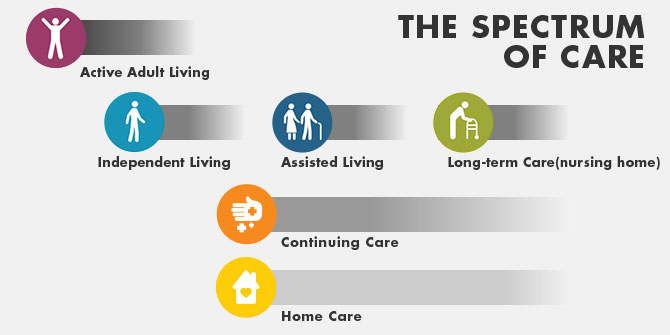
Toronto is particularly rich in independent living, assisted living, and Alzheimer’s & dementia care (as well as long-term care) communities.
Many Toronto communities also allow for a "continuum" of care. This means healthy residents can live in an independent living suite at the residence for many years, and as their health demands increase they move to an assisted living suite within the same community. (Assisted living offers a greater level of medical care and staff time for health and other personal needs). This means residents can remain within the community of their friends and peers, where they are familiar, while still ensuring their changing health needs are met.
For seniors with dementia or Alzheimer’s disease there are a few residences in Toronto offering 24-hour care in a secured community. These retirement homes specialize in this, ensuring that residents are provided a comfortable, familiar, home-like environment that meets their unique and challenging needs. Care for dementias other than Alzheimer's may differ slightly as our understanding increases; learn more about care for other dementia types.
Costs of retirement care in Toronto
Seniors can rent, own, or life-lease suites and entire homes, (see our comparison piece here). The most common financing option is renting, however, and that's what we'll address.
In 2020, the average rent in Ontario grew by 2.8% to $3,865 a month. The vacancy rate for standard spaces increased to 11.0% across all seniors’ housing unit types.
As seen for many years, Etobicoke had the highest average monthly rent in Ontario, at $5,559.
To come up with the funds to pay retirement home rent, most seniors use a combination of their pensions, RRSPs, CPP and other income. Many seniors use the profits from the sale of their home and even help from family members to cover their costs.
Use our retirement calculator to help understanding and managing the costs associated with retirement home living.
For seniors who need financial assistance, it’s good to know that some retirement homes work with the City of Toronto to provide subsidized help for seniors, however due to high demand it is difficult to receive this subsidized care. Contact the City of Toronto for further details.
The Trillium Drug Program (TDP) is another option for seniors looking for financial help. The TDP helps people with high prescription drug costs relative to their household income. It covers a number of approved drugs and almost anyone who has an Ontario health card, lives in Ontario and is a senior over the age of 65 years of age is eligible to apply.
Senior living in Toronto
Many Toronto seniors are accustomed to living in their traditional family home — or perhaps a condo or other arrangement. In some cases, though, this gradually blinds them to the fact that living alone is no longer part of an ideal lifestyle. Neighbours around them get younger. Keeping ahead of home maintenance becomes progressively more difficult. Friends move or pass away (a sad fact of life.) On their own, people end up making simpler meals and eating less, reducing social outings, and decreasing physical activity. When you move into a senior living community, though, new opportunities abound. People discover how easy it is to make and maintain new friendships. When you pass on mundane daily activities to other people, you discover or rekindle passions left dormant while you were raising kids, paying the bills and maintaining the house.
Janet is one example. “When I moved into [a retirement home],” she says, “I decided to join the art class. I had not done much painting before.” Her art has now found other homes, too. It’s even been featured in publications from the community in which she lives.
When you’re cooking for one or two, you may have a tendency to stick to sandwiches or soup. But in the best Toronto retirement homes, dining is an experience. Some feature chefs who “create meals as a celebration of good food … [they] provide a venue to come together as one of the measures of success.” It’s not just eating anymore, it’s eating very well, and in the same way, it’s not just “senior living,” it’s living very well. Read more about dining in Toronto communities that count themselves among the city's finest.
In a community of peers, it’s much easier to find a circle of friends who share interests. At one Toronto community there is a poetry circle that meets once per month. When the group gets together, it’s much more fun than serious or, as one group member says, “the interruptions are the main event.” Here, their time together goes too fast. Myrla says, “It’s a lovely hour. I wouldn’t miss it. The whole thing—the interaction with ideas and talking together.”
These stories are a small part of the overall collection of transformative experiences felt by seniors in Toronto retirement communities. We encourage you to read more testimonials at profiles of communities linked to above and also sampled in our Toronto retirement community reviews.
Well-run homes address the physical, emotional and social aspects of aging, and encourage seniors to socialize, explore their interests, and make the most of their retirement years.
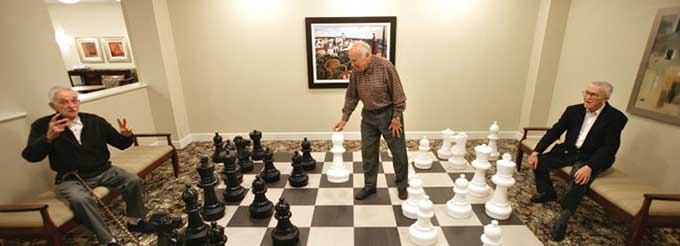
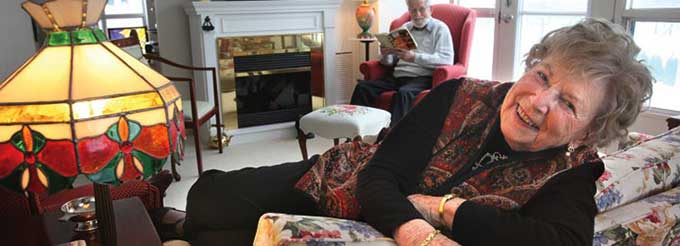
Photo: Toronto offers retirement community residents a plethora of activities, but sometimes the most fun can be had from home.
Many Toronto retirement communities take advantage of the surrounding city for sources of stimulation. Residences organize bus trips within the GTA to shopping malls like Yorkdale, Square One and the Eaton Centre as well as other attractions like The Royal Ontario Museum, Ripley’s Aquarium, and the Toronto Art Gallery, while others offer bus trips outside of Toronto to areas like Niagara Falls and Stratford for events such as the Stratford Festival.
Toronto offers a variety of amenities and activities including the theatre, waterfront and distillery districts, cycling and walking trails, parks, museums and art galleries, as well as year round festivals and events. Examples of popular events are the Canadian Stage Company’s outdoor Shakespeare production “Dream in High Park” each summer in Toronto’s High Park, the Toronto International Film Festival (TIFF), the Caribbean Carnival (also called Caribana) in July/August, and Pride Week annually near the end of June.
Those interested in sports can enjoy any of Toronto’s seven major league sports with access to popular sports venues such as the Air Canada Centre, Rogers Centre, BMO Field and Ricoh Coliseum. The ACC and Rogers Centre in particular provide a variety of tradeshows, conventions and concerts that may interest residents.

Photo: Residents often take classes -- either from within or outside the retirement community.
But retirement communities, of course, also provide their own daily activity plan and full recreation program, along with religious services for seniors of various faiths. Some examples of daily activities include bingo, cards, movies, musical concerts, entertainment which is brought into the residence, and celebrations of local festivals and holidays. Some communities also offer a games room, spa services, mini-golf/Wii, community gardens, party rooms and arts/crafts rooms for seniors to develop and share their interests with others.
A number of volunteers are also involved in retirement community life in Toronto. Primary, middle and high school students often visit residents, university students complete internships and there are a number of senior volunteers who come to spend time with seniors.
Medical and safety services for Toronto seniors
Montfort Hospital provides a wide range of programs available with a referral, such as cardiovascular and pulmonary health, diabetes, falls, rehabilitation, thrombosis, a sleep laboratory, and spiritual and religious services.
Most retirement homes in Toronto -- regardless of where they fall on the care spectrum -- have an on-site doctor, or a doctor who visits residents on a regular basis. On-site nursing staff are also available in most retirement homes, although their availability will range – some are available 24/7 while others are available for specific hours, depending on the type of retirement home and living package you choose.
A pharmacy on-site is less common, although it does exist in some retirement homes in Toronto. (Only 5% of senior homes in Ontario offer an on-site pharmacy, which is one of the lowest provincial averages in Canada).
Depending on the retirement community, a number of other medical programs may be available, ranging from simple exercise programs, to intensive physiotherapy, to recuperative programs, to programs for knee-replacements, to special dietary programs.
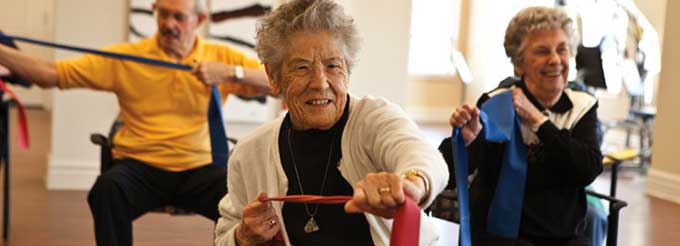
Photo: a good retirement community will include activities that keep residents healthy.
Residents who need medical care outside of the scope of what the retirement home can offer may hire one-on-one care; sometimes the LHIN will pick up the tab for this extra service.
Many communities have developed partnerships with nearby hospitals -- like Sunnybrook Hospital, for example, whcih runs transitional programs with local retirement homes.
The high concentration of world-class hospitals in Toronto also helps. Seniors deciding to stick around Toronto in one of its retirement homes can depend on one of the medical centres specializing in geriatric care.
Toronto also has a number of health-focused non-profit organizations to help raise awareness for and treat residents, such as the Alzheimer Society of Toronto, the Heart and Stroke Foundation, the Crohn’s and Colitis Foundation of Canada, and the Canadian Cancer Society which all have offices in the downtown core. The ALS Society of Canada, Canadian Mental Health Association and Canadian Breast Cancer Foundation are other examples of organizations in the area that assist residents within the GTA.
Keeping residents safe
With one of the lowest crime rates in Canada, Toronto is considered one of the safest major cities in North America. A quality retirement community will work hard to ensure its residents are safe inside and outside the residence. Toronto homes commonly have security monitoring, call bell systems, and emergency phone systems in place to safeguard their residents’ and help them feel confident as they explore their new community and surrounding area.
All retirement communities in Toronto are also provincially legislated to provide a safe environment for seniors, (see below for more info).
How seniors get around Toronto
Most retirement homes ensure that a senior’s transportation needs are well cared for, either through bussing or a group of orgnized volunteers. For independent seniors who want to get around Toronto on their own, there are a number of options:
- TTC - Fees vary depending on single cash fare ($2), tickets, monthly metropass, Metropass Discount Plan (MDP), weekly pass or Downtown Express.
- GO Transit - 65 years or over - Senior single-ride fare is half the adult single-ride fare. There are no further discounts for day pass.
- Toronto Ride
- Center for Independent Living Resources - Taxi information for people with folding wheelchairs/walkers, transportation services for Toronto and other regions, rental car info, special needs transportation.
- TransCare - Low cost and senior-friendly transportation and escort services to medical appointments, other therapeutic programs and grocery shopping.
- Wheel-Trans - Door-to-door accessible transit service for persons with physical disabilities using accessible buses, contracted accessible and sedan taxis. Registered users are eligible for Wheel-Trans based upon their level of physical functional mobility in the home, within the area immediately surrounding the home and in the community at large, as well as permanency of disability. Eligibility is not based on particular disabilities, general health or income. Service is provided anywhere within the City of Toronto for a regular TTC fare.
- Greyhound Bus
For seniors who are looking to get around Toronto’s suburbs these community services are available:
- TransHelp - For Halton, Peel Brampton and Caledon areas.
- Community Care Durham - For Ajax and Pickering
- Durham Region Transit Specialized Services
Availability of retirement homes in Toronto
Demands for space have decreased slightly across Ontario for all unit types, except for ward/semi-private spaces. In 2021, there were 67,399 units available in Ontario for seniors, with demand highest for two bedroom suites. Toronto had 21,056 units total, with a vacancy rate of 20.7%.
How to choose a retirement home in Toronto
When it comes to choosing a retirement home, there is a lot to consider. Some seniors are looking for homes near their family, while others want to explore the benefits of a more active lifestyle. The first step is to determine what you want, what you’re looking for, what you can afford and the location of your search (assuming you have a particular neighbourhood in mind).
If you’re not sure whether it’s time to consider retirement living, consider the following starter questions:
- Do you want to stay active but be freed from housework or making meals?
- Is living independently becoming more difficult? Do you feel lonely or isolated?
- Is maintaining your current home becoming too onerous?
- Are you able to meet your personal care needs?
- Are daily tasks such as shopping and cooking becoming too much of a burden or would you rather have help?
- Are you worried about falling or becoming ill and not being able to get help?
- Do you want easier access to recreational and social activities?
- Do you want to live near others your age?

Be sure to read our Toronto retirement home reviews before you commit to any senior care community in Toronto.
How to Choose a Retirement Community from Comfort Life on Vimeo.
For more points to consider and some common questions and concerns about retirement homes, please visit our page for seniors considering a retirement home.
It's also important to ensure your medical needs are met, the residence you choose is affordable now and in the future, and that the home can grow with your needs as your activity and medical levels change over time.
Keep in mind that if you are interested in a long-term care home in particular, it’s likely you will be put on a waitlist. Semi-private and private accommodations generally cost more but may have shorter wait times, and different factors may affect average wait times, such as the type of accommodation requested, if someone is in crisis, if there is an ethno-cultural preference, or if there are specific medical care needs. For more information on wait times, contact the designated associations mentioned below (under "Toronto retirement community regulations) or the retirement community of your choice directly.
If you’re not sure whether a retirement home is right for you, many homes will offer overnight stays to provide an opportunity for you or your loved ones to get the full experience of what the residence has to offer.
Get more information about choosing a retirement home, or contact the residences above to get started with your search.
Don’t forget to download the Ultimate Retirement Tour Checklist to take with you when you begin touring retirement communities on your shortlist.
Toronto retirement home regulations
Retirement communities throughout Ontario, including Toronto, are subject to the Retirement Home Regulatory Authority (RHRA), which set a deadline of July 3, 2012 for existing residences to become licensed. Licensing requires retirement homes to receive approval and undergo ongoing inspections by the RHRA in order to operate.
Many retirement homes in Toronto are also members of provincial and national associations, including:
- The Ontario Retirement Communities Association (ORCA)
- Older Adult Centres’ Association of Ontario (OACAO)
- The Canadian Association of Retired People (CARP)
- The Ontario Community Support Association
- The Ontario Local Health Integration Network (LHIN)
- The Ontario Home Care Association (OHCA)
- The Ontario Long-term Care Association (OLTCA)
- AdvantAge Ontario (formerly the Ontario Association of Non-Profit Homes and Services for Seniors: OANHSS)

Source: CMHC Seniors’ Housing Survey 2020-2021